

What the Sangat is looking for on our new website
What the Sangat is looking for on our new website
The first thing the website has taught us is simple: people come to SGSS with a purpose.
The matrimonial service was visited 913 times between 20 August and 13 September. The next most popular service, Panjabi Classes, had 75 views. The gap is striking. It tells us that the website is not only a noticeboard. For many people, it is the first place they look for help with something important in their lives.
The services people are finding
After matrimonial and Panjabi Classes, the most visited services were Kirtan Classes, Wellbeing, Library and Gurbani Santhiya. People also looked for Sikh Chaplaincy, Computer Training and Chair Yoga.
The matrimonial page was also the starting point for 280 visits. People were arriving there directly, often from a search, before seeing the rest of the website.
The enquiries tell the same story. The website received 26 service requests, including 19 about matrimonial. There were also requests about Panjabi and kirtan classes, the library, computer training and adults' badminton and fitness.
These are requests, not confirmed bookings or a count of different people. But they show that the website is helping people take a real first step.
People want to know what is happening
The events pages were viewed 1,141 times. The Langar page was viewed 250 times, and the About pages 403 times.
That gives us a good picture of what a visitor needs from us: when something is happening, how to take part, what to expect when they arrive, and how the Gurdwara serves the community.
The busiest day was Saturday 29 August, with 88 visits. The following Sunday and Monday were also busy, with 86 visits each. A bank holiday may have played a part, but the larger lesson is that people are checking the website when they are deciding what to do.
Google is helping people find us
Search was the biggest source of visits. Google brought 861 visits during the period, with searches such as “Hounslow gurdwara”, “Hounslow gurdwara matrimonial” and “Alice Way gurdwara”.
Google also showed our pages 14,020 times and people clicked through 782 times during the search reporting period. The searches reveal how people think about us. They use our name, our neighbourhood and the service they need.
One search appeared 940 times but produced only three visits to the website: “gurudwara near me”. Some of those people may have found what they needed in Google itself, such as our location or opening hours. It still shows how important our local information is.
There were also 21 visits that arrived through ChatGPT. That is a small early sign that people are beginning to use new ways to find information about local organisations.
The phone is the front door
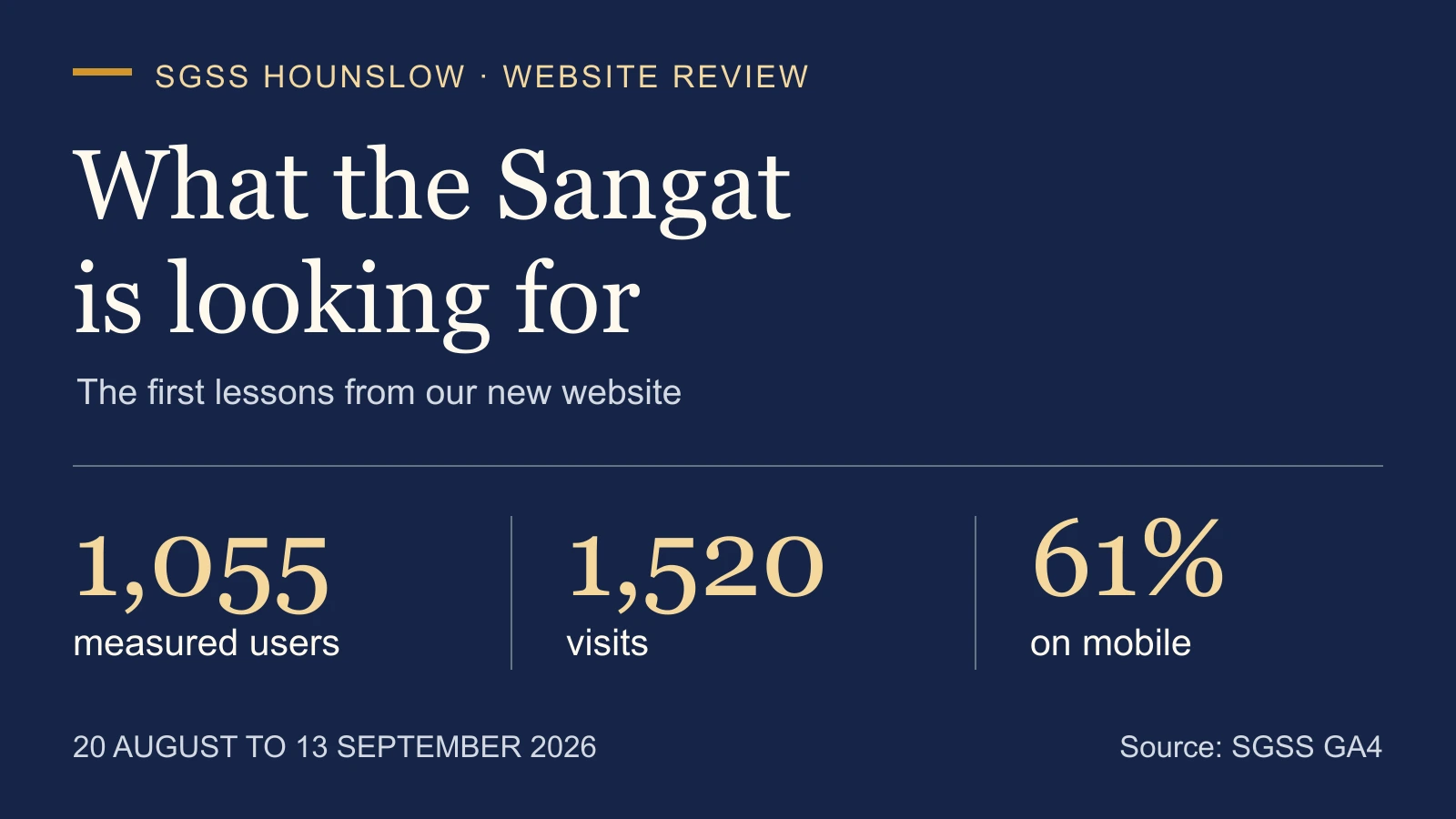
About six in ten visits came from a mobile phone. In Google search, phones produced almost three quarters of the clicks.
For a normal visitor, this matters more than any technical report. If someone is standing outside the Gurdwara, travelling to an event or filling in a form, they are likely to be using a phone. Dates, phone numbers, directions and forms need to be clear at a glance.
The honest part of the story
The launch also showed us where a website can let people down.
Some people were still being sent to old pages from Google. The old matrimonial address, for example, had received 155 search clicks before the new route was put in place. That link now takes people to the right service. The old facilities, trustees and contact links have also been brought across.
We also found that early website figures included some of our own administration and testing. That made the first numbers look busier than the public site really was. The figures in this article remove the obvious internal activity, so they give us a fairer picture.
Donations taught us another useful lesson. A person clicking the donation button has shown an intention to give, but that is different from a completed donation. The website now records the payment only after it has been confirmed. Three confirmed donation events were recorded during this period. That number should be read alongside the charity’s payment records, rather than treated as a total raised.
What this means for the future
The plan is to keep the website focused on the things people actually need: clear service information, up-to-date events, straightforward visiting details and forms that are easy to use on a phone.
We will keep learning from the questions people bring to us. We will keep improving the journeys that help them find an answer, make an enquiry or come through the Gurdwara doors.
The most encouraging finding is that people are using the site for real parts of community life: finding a partner, learning Panjabi, joining kirtan, checking events, understanding Langar and planning a visit. The website is becoming another way for the Sangat to connect with SGSS.
The figures cover 20 August to 13 September 2026, with Google Search figures covering 19 August to 11 September. Website visits and enquiries show interest, not attendance, membership approval or confirmed bookings. Users are measured browser identities, not a headcount of individuals.